


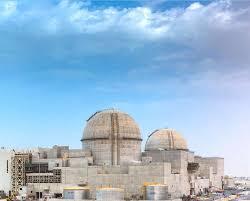
DUBAI: The United Arab Emirates has proudly announced the completion of the Arab world’s first nuclear power plant, marking a historic milestone for the region. The Barakah Nuclear Energy Plant in Abu Dhabi officially began operations with its fourth and final reactor now in commercial use, according to the Emirates Nuclear Energy Corporation (ENEC).
The plant is set to produce 40 terawatt-hours of electricity annually, fulfilling 25 percent of the UAE’s energy requirements—equivalent to New Zealand’s yearly consumption. This achievement signifies a major step in the UAE’s push towards diversifying its energy sources, traditionally dominated by oil.
The Barakah plant, named “blessing” in Arabic, began its journey in 2020 with the commissioning of its first reactor. It will now supply power to major industrial players such as the Abu Dhabi National Oil Company (ADNOC), Emirates Steel, and Emirates Global Aluminium.
Emirati President Sheikh Mohamed bin Zayed Al Nahyan hailed the completion of Barakah as a crucial advancement in the UAE’s quest for net-zero emissions. He emphasized the nation’s commitment to energy security and sustainability, stating, “We will continue to prioritize energy security and sustainability for the benefit of our nation and our people today and tomorrow.”
As the UAE invests in renewable energy to meet half of its energy needs by 2050, Barakah represents a significant step away from its reliance on fossil fuels. The plant’s establishment aligns with the UAE’s broader climate goals and reflects its ongoing efforts to transition towards cleaner energy sources.
The International Atomic Energy Agency has noted that the plant will need to be decommissioned in 60-80 years. While the UAE has clarified that its nuclear ambitions are solely for peaceful purposes, it continues to invest in other renewable sources, including one of the world’s largest solar plants located outside Abu Dhabi.